Belinal® Boosts Cartilage Growth in the Osteoarthritis Joints
Osteoarthritis is a common and debilitating condition that affects millions of people worldwide. It is characterized by the degeneration of cartilage, the cushioning tissue that covers the ends of bones within the joints. This degeneration leads to pain, stiffness, inflammation, and reduced mobility. Osteoarthritis can affect any joint, but it is most prevalent in the hips, knees, fingers, and spine.
The causes of osteoarthritis are not fully understood, but contributing factors include aging, genetics, obesity, injury, and overuse. There is currently no cure for osteoarthritis, and existing treatments primarily focus on relieving symptoms and improving joint function.
Mesenchymal stem cells (MSCs) from osteoarthritic patients have been shown to exhibit impaired function and reduced chondrogenic potential, meaning they are less capable of forming new cartilage. This impairment is largely attributed to chronic inflammation and oxidative stress present in the osteoarthritic environment. MSCs naturally migrate to sites of injury and inflammation and play a key role in modulating immune activity and the inflammatory response. They also hold significant promise in regenerative medicine, as they can be isolated, expanded, and manipulated in vitro.
Enhancing the chondrogenic potential of MSCs is therefore a promising strategy for restoring cartilage and potentially reversing osteoarthritis. Belinal® has been clinically shown to support cartilage growth and repair in osteoarthritic joints by enhancing the activity of mesenchymal stem cells.
Our study demonstrates that Belinal® can effectively enhance the chondrogenic potential of MSCs derived from osteoarthritic patients under both non‑inflammatory and inflammatory conditions. We compared the effects of Belinal® with those of Pycnogenol®, Resveratrol, and Quercetin—botanical extracts known for their anti‑inflammatory and antioxidant properties—and included an untreated control group for reference.
Effects of the Belinal® on Chondrogenesis under non Inflammatory Conditions
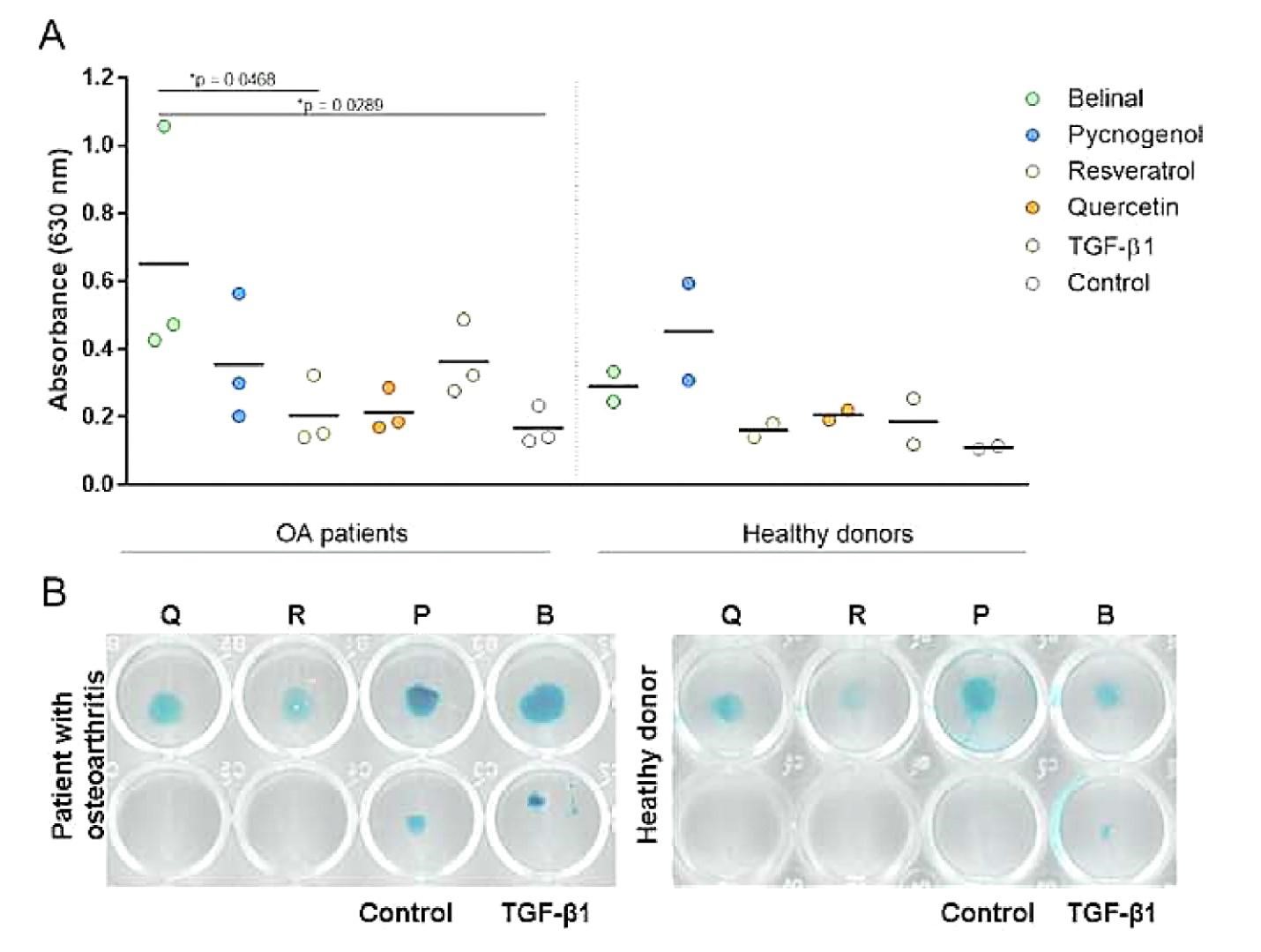
Q – Quercetin, R- Resveratrol, P- Pycnogenol, B – Belinal
Diagram 1: Effects on chondrogenesis under non-inflammatory conditions
As you can see, Belinal® significantly increased the chondrogenesis of MSCs from osteoarthritic patients, under both non-inflammatory and inflammatory conditions. Belinal® was more effective than Pycnogenol®, Resveratrol, and Quercetin, which had either no effect or a negative effect on chondrogenesis. Belinal® also increased the chondrogenesis of MSCs from healthy donors, but to a lesser extent than in osteoarthritic patients. This suggests that Belinal® has a specific effect on restoring the chondrogenic potential of MSCs that is impaired by osteoarthritis.
Effects of The Belinal® on Chondrogenesis under Inflammatory Conditions

Q – Quercetin, R- Resveratrol, P- Pycnogenol, B – Belinal
Diagram 2: Effects on chondrogenesis under inflammatory conditions
Mechanisms of Action
- Stimulation of Cartilage Growth Belinal® enhances the chondrogenic potential of mesenchymal stem cells (MSCs) derived from patients with osteoarthritis and may play an important role in the future treatment and prevention of joint disease.
- Anti‑inflammatory Activity of Belinal® Belinal® demonstrates strong anti‑inflammatory effects, including:
- Inhibition of COX‑2 activity
- Suppression of pro‑inflammatory cytokine expression (TNF‑α, IL‑6, IL‑1β)
- Reduction of COX‑1 activity
- Inhibition of histamine release
Chronic inflammation is known to play a pivotal role in cartilage degradation.
Suggested Dose of Belinal® in your Joint Health Formula
120–140 mg Dose

Conclusion
Our research demonstrates that Belinal®, a patented herbal extract from silver fir branches, can enhance the ability of mesenchymal stem cells to form cartilage in patients with osteoarthritis. Belinal® has a strong antioxidant, anti-inflammatory, and regenerative effect, which could make it a valuable ingredient for future therapies and prevention of joint disorders.
References:
- Sirse M, Fokter K S, Strukelj B, Zupan J. Silver Fir (Abies alba) Polyphenolic Extract ( Belinal) Shows Beneficial Influence on Chondrogenesis In Vitro under Normal and Inflammatory Conditions.
- Molecules 2020, 25, 4616.
- Oliviero F, Scanu A, Zamudio-Cuevas Y, Punzi L, Spinella P. Anti-inflammatory effects of 371 polyphenols in arthritis. J Sci Food Agric 2018;98:1653-9. doi:10.1002/jsfa.8664
- Kroes BH, van den Berg AJ, Quarles van Ufford HC, van Dijk H, Labadie RP. Anti-inflammatory activity of gallic acid. Planta Med. 1992;58(6):499-504.
- Pragasam SJ, Venkatesan V, Rasool M. Immunomodulatory and anti-inflammatory effect of p-coumaric acid, a common dietary polyphenol on experimental inflammation in rats. Inflammation. 2013;36(1):169-7
- During A, Debouche C, Raas T, Larondelle Y. Among plant lignans, pinoresinol has the strongest antiinflammatory properties in human intestinal Caco-2 cells. J Nutr. 2012;142(10):1798-805.